Walking into a newly constructed office last month, I noticed something interesting. One side featured sleek aluminium and glass partitions, while the other had smooth, painted gypsum walls that felt almost permanent. That contrast highlights a common and important decision in modern construction: aluminium vs gypsum partitions.
If you are planning an office renovation, commercial build, or residential interior project, this decision directly affects your budget, installation time, flexibility, maintenance costs, and long-term usability. Here is a clear, practical comparison to help you choose confidently.
Table of Contents
What Are Aluminium and Gypsum Partitions?
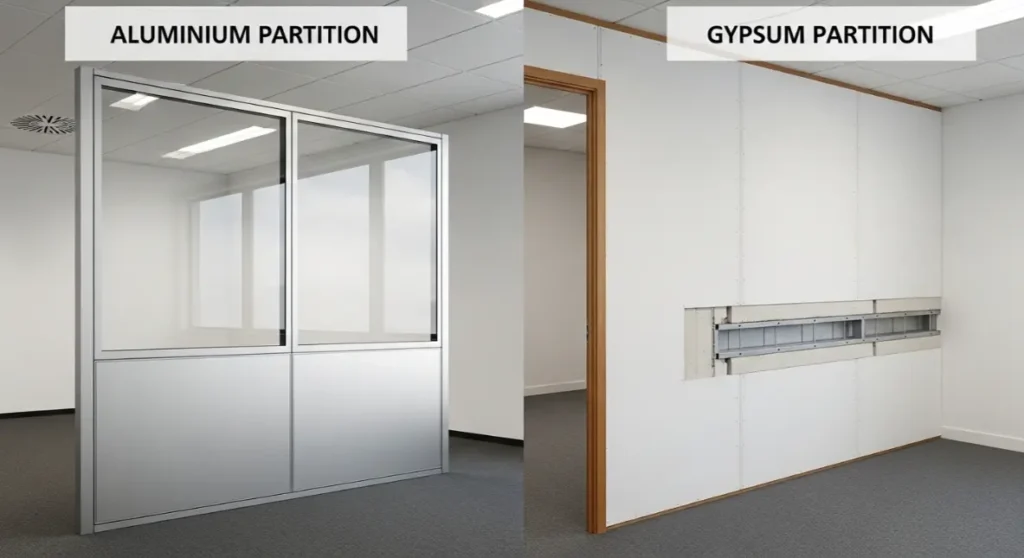
Aluminium Partitions
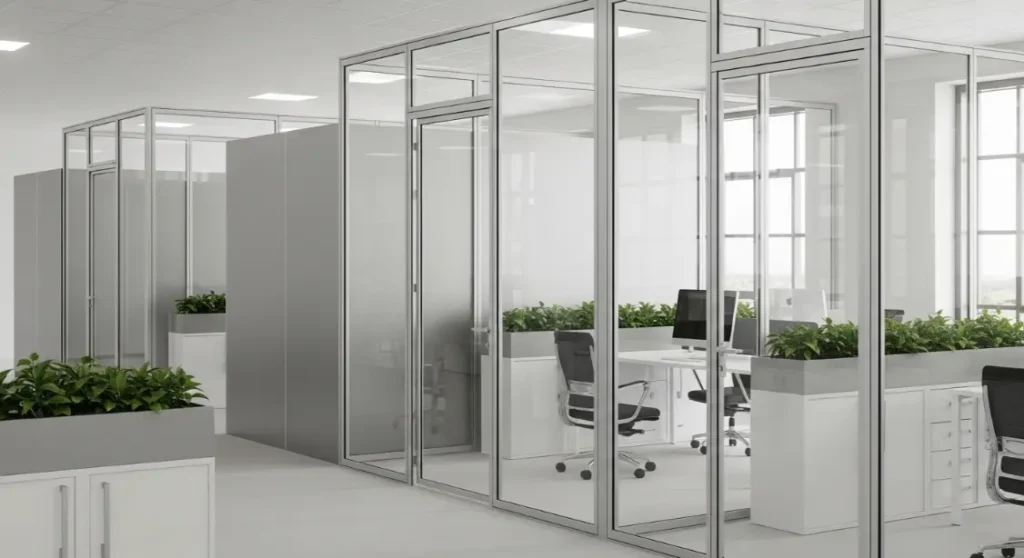
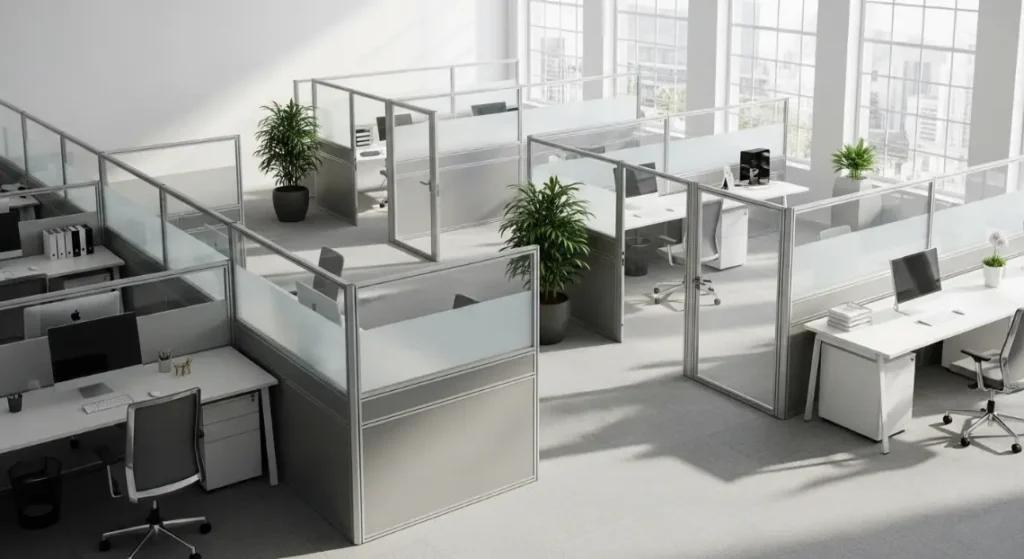
Aluminium partition systems use metal frames combined with glass, wooden, or solid aluminium panels. These partitions are modular, modern, and widely used in offices, hospitals, commercial buildings, and co-working spaces where layout flexibility is important.
Gypsum Partitions
Gypsum partitions are constructed using gypsum boards (drywall or plasterboard) fixed to metal or wooden studs. Once finished and painted, they resemble traditional brick walls and are commonly used in homes, hotels, and permanent office layouts.
Installation Time: Which One Is Faster?
Aluminium partitions are significantly faster to install.
- Installation time: 3–5 days
- Factory-made components
- No wet work
- Minimal dust and disruption
- Space is usable almost immediately
Gypsum partitions take longer.
- Installation time: 7–10 days or more
- Multiple steps, including framing, board fixing, jointing, sanding, and painting
- Drying time required between stages
- More dust and site disturbance
For businesses with tight deadlines, aluminium partitions often become the preferred choice.
Cost Comparison: Short-Term vs Long-Term Value
Aluminium Partition Cost
- Average cost: $50–$150 per sq ft
- Higher upfront investment
- Long lifespan of 15–20 years
- Minimal maintenance
- Reusable during reconfiguration
Gypsum Partition Cost
- Average cost: $25–$60 per sq ft
- Lower initial cost
- Requires repainting and repairs over time
- Demolition required for layout changes
While gypsum is cheaper initially, aluminium often proves more cost-effective over time due to durability and reusability.
Flexibility and Future Changes
This is where the difference is most noticeable.
Aluminium partitions
- Easily dismantled and reused
- Ideal for growing businesses
- Perfect for offices, startups, and co-working spaces
Gypsum partitions
- Fixed and permanent
- Removal means demolition and waste
- Better suited for long-term layouts
If your space may evolve, aluminium offers unmatched flexibility.
Design and Aesthetic Appeal
Aluminium Partition Design
- Modern and professional appearance
- Glass options increase transparency and natural light
- Slim profiles maximize usable space
- Popular in corporate offices, showrooms, and healthcare facilities
Gypsum Partition Design
- Solid, traditional wall look
- Easy to paint and customize
- Suitable for mounting shelves and décor
- Preferred in homes, hotels, and executive offices
Your choice often reflects your brand identity and the function of your space.
Soundproofing and Privacy
Gypsum partitions naturally offer better sound insulation.
- Noise reduction of 40–50 dB with insulation
- Ideal for bedrooms, meeting rooms, therapy spaces, and private offices
Aluminium partitions
- Standard glass offers limited soundproofing
- High-performance acoustic systems are available at a higher cost
For privacy on a budget, gypsum is the stronger option.
Durability and Maintenance
Aluminium
- Moisture resistant
- No warping or mold
- Ideal for humid areas, bathrooms, and laboratories
- Easy cleaning and long-lasting finish
Gypsum
- Sensitive to moisture
- Can crack, dent, or swell
- Requires periodic repairs and repainting
- Better for climate-controlled interiors
High-traffic commercial areas benefit more from aluminium’s durability.
Fire Safety Performance
Both materials can meet fire safety regulations when properly specified.
- Aluminium partitions with fire-rated glass can provide 30–120 minutes of fire resistance
- Gypsum boards are inherently fire-resistant due to their moisture content
- Type X and Type C gypsum boards offer enhanced fire protection
Always confirm fire ratings with suppliers and local building codes.
Environmental Impact and Sustainability
Aluminium partitions
- 100% recyclable
- Reusable during renovations
- Lower waste generation long term
- Recycled aluminium uses significantly less energy
Gypsum partitions
- Made from natural minerals
- Limited reusability
- High demolition waste
For sustainable and adaptable buildings, aluminium offers a long-term environmental advantage.
Best Use Cases: Quick Decision Guide
Choose Aluminium Partitions If You Need:
- Modern office design
- Flexible layouts
- Fast installation
- Moisture resistance
- Natural light optimization
- Long-term durability
Choose Gypsum Partitions If You Want:
- Permanent walls
- Strong sound insulation
- Lower initial cost
- Traditional aesthetics
- Residential or hotel interiors
Many projects successfully combine both for optimal results.
Final Verdict: Aluminium vs Gypsum Partitions
There is no one-size-fits-all answer.
- Aluminium partitions excel in flexibility, speed, and modern design
- Gypsum partitions deliver affordability, privacy, and permanence
The best choice depends on your budget, timeline, privacy needs, plans, and design vision.
Take time to evaluate how your space will be used today and how it may change tomorrow. When aligned correctly, the right partition system will enhance comfort, efficiency, and value for years to come.
Faqs
Is a gypsum wall better than an aluminium wall?
A gypsum wall is better for privacy, sound insulation, and cost-effective partition walls in residential and commercial spaces. An aluminium wall is better for modern offices, offers greater flexibility, and enhances natural light, especially when combined with glass panels.
Is gypsum board good for a wall partition?
Yes. Gypsum board, made from gypsum and known as drywall, is a popular and functional partition wall type. It is easy to install, fire-resistant, and ideal for office partitions, meeting rooms, and gypsum ceiling systems.
Is an aluminium partition waterproof?
Yes. Aluminium partitions are waterproof and moisture-resistant. Aluminium frames with glass or panels are easy to clean and suitable for high-traffic commercial environments and modern office interiors.
Which is better: Hardiflex or gypsum board?
Gypsum board is lighter, more cost-effective, and better for interior wall design and ceiling systems. Hardiflex is heavier than gypsum and stronger, making it suitable for high-impact commercial spaces.